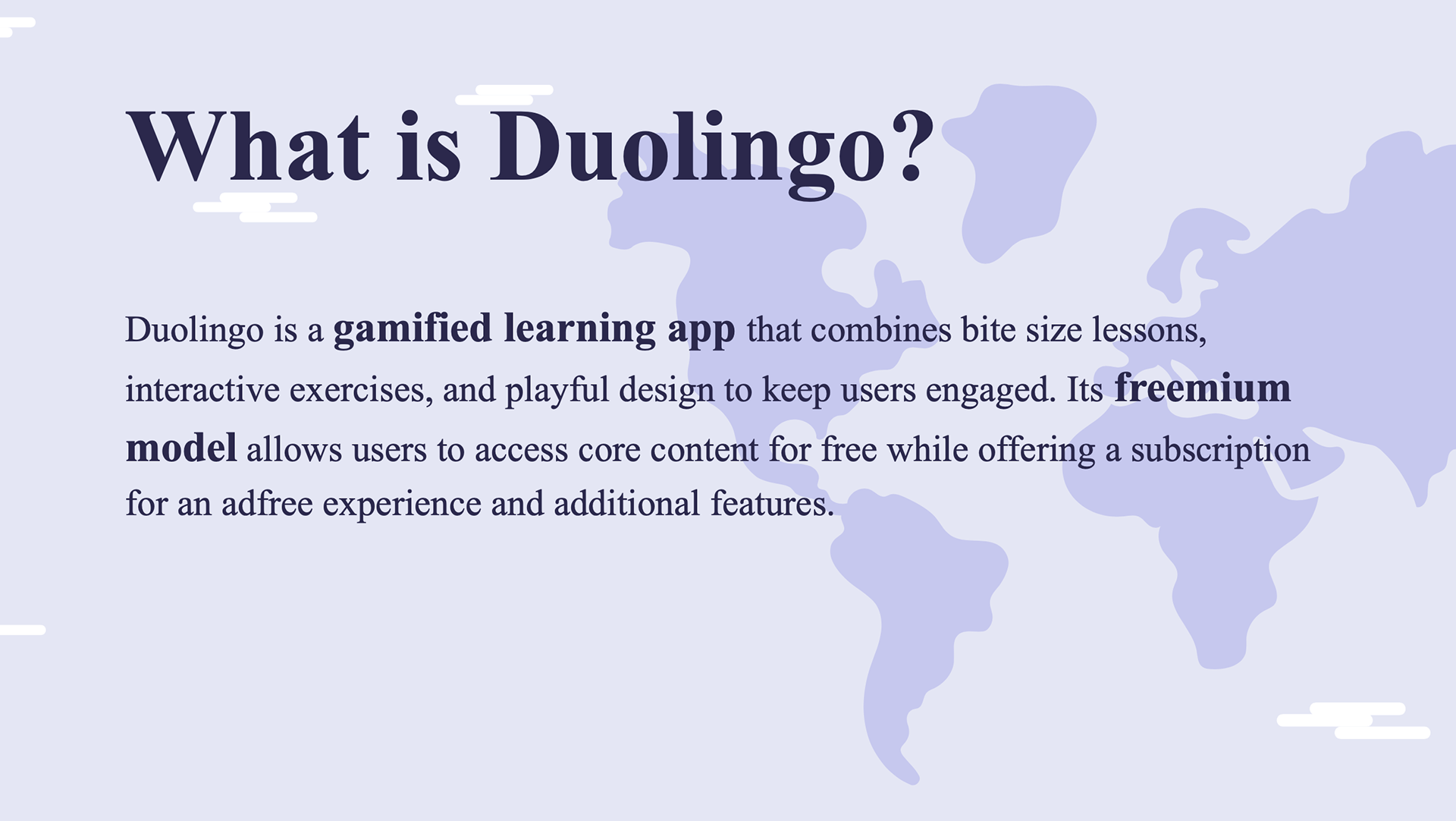
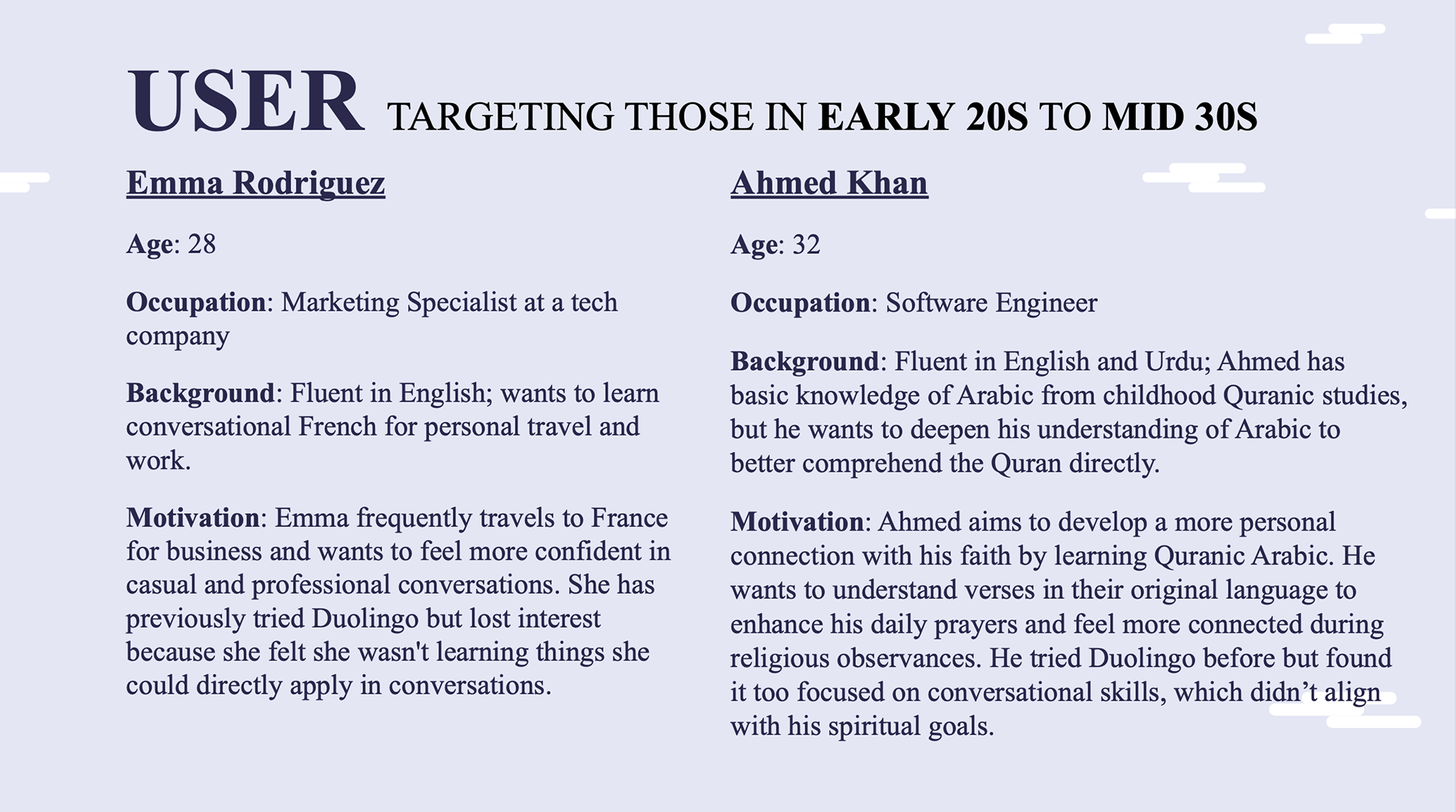
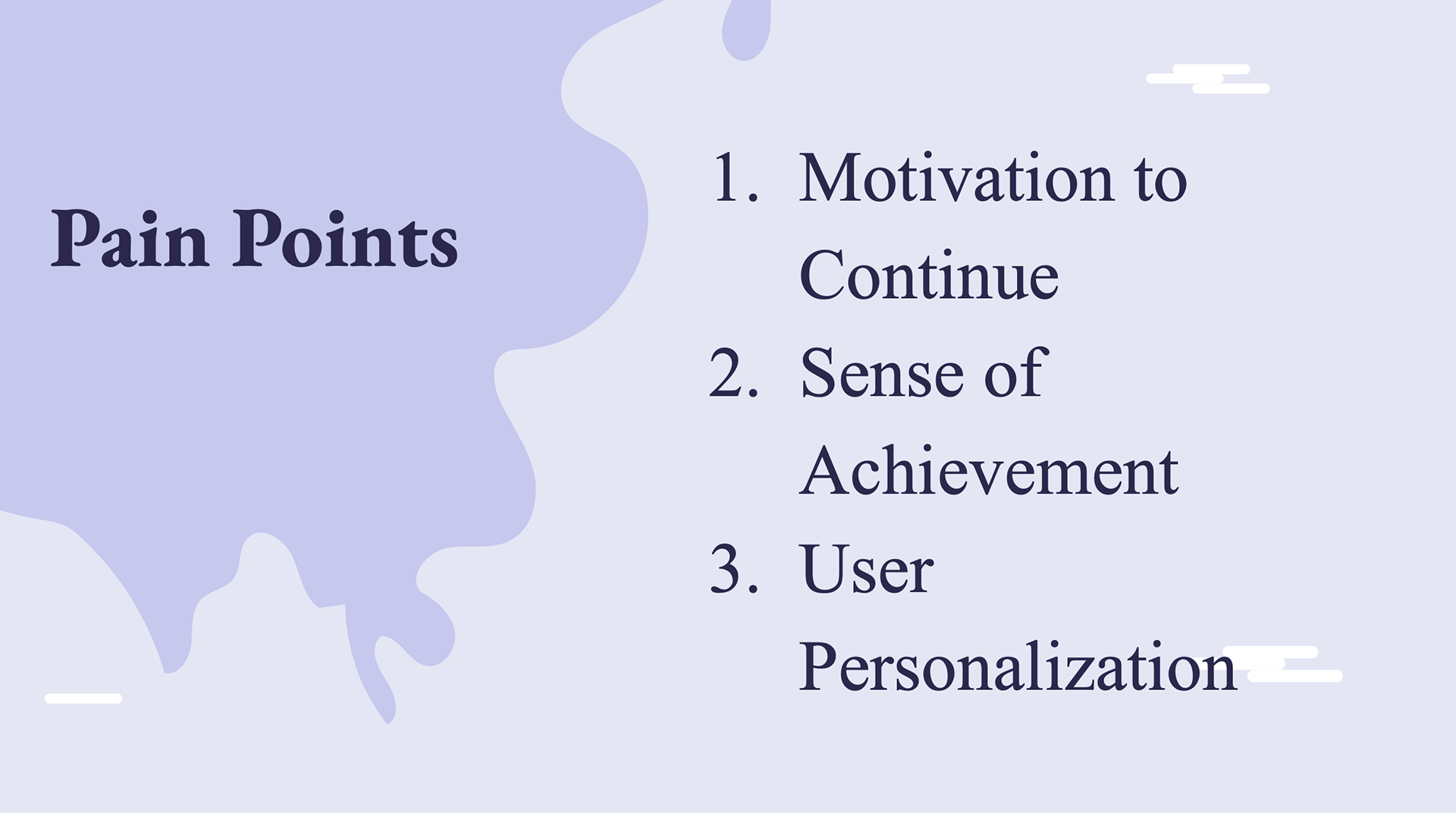
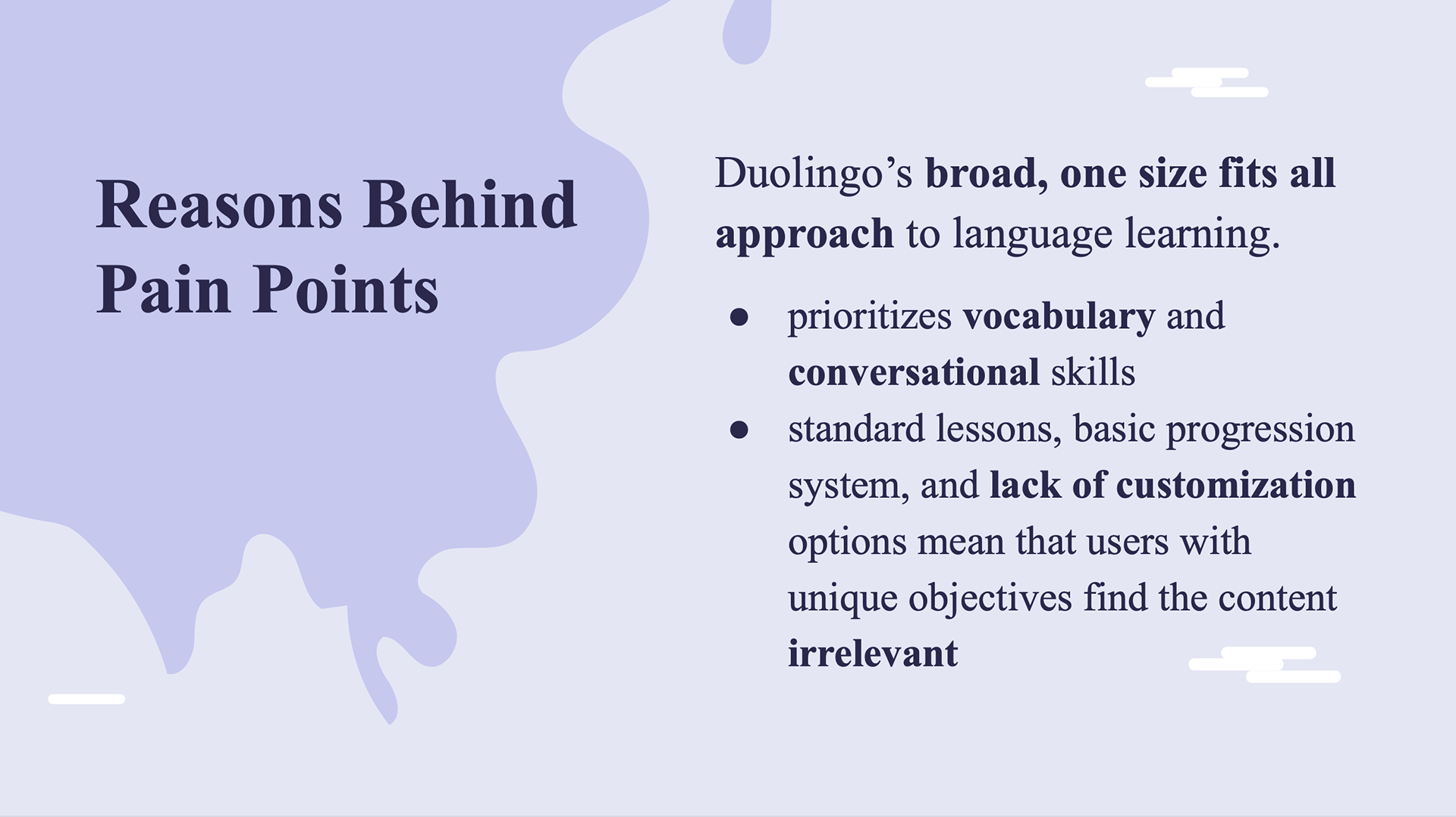
The root cause of user disengagement on platforms like Duolingo stems from its broad, one-size-fits-all language approach. While effective for general fluency, it doesn’t cater to users with specific learning needs, aiming to learn Quranic Arabic for religious purposes. By juxtaposing these diverse learning objectives with Duolingo’s general model, I identified a gap that led to frustration and a lack of engagement. To counter this gap, I've ideated a feature that can feasibly be incorporated into Duolingo. At the end of my first semester at NYU's Product Management Club, I presented my proposed feature to real-life product managers at Meta and Google.
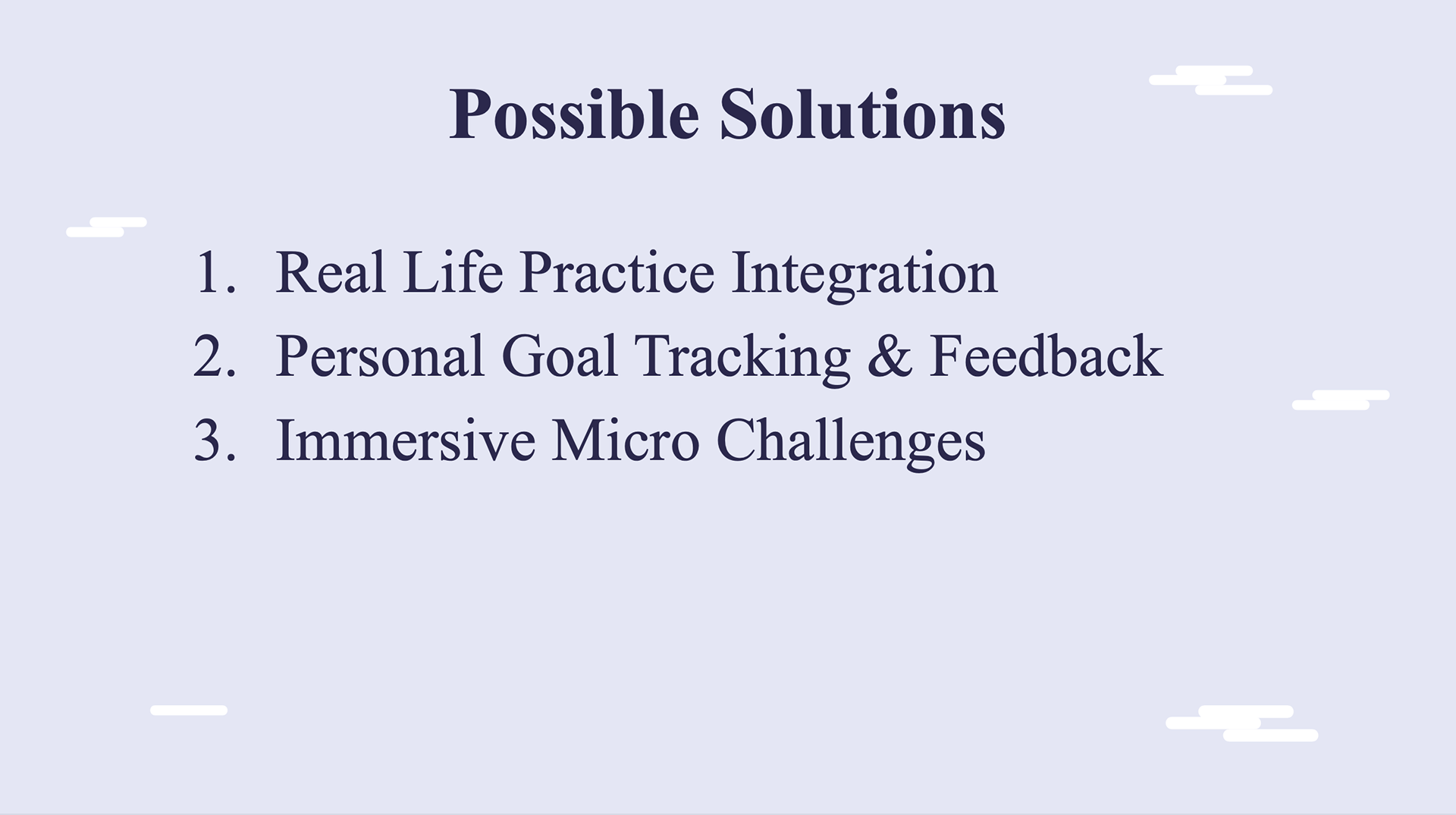
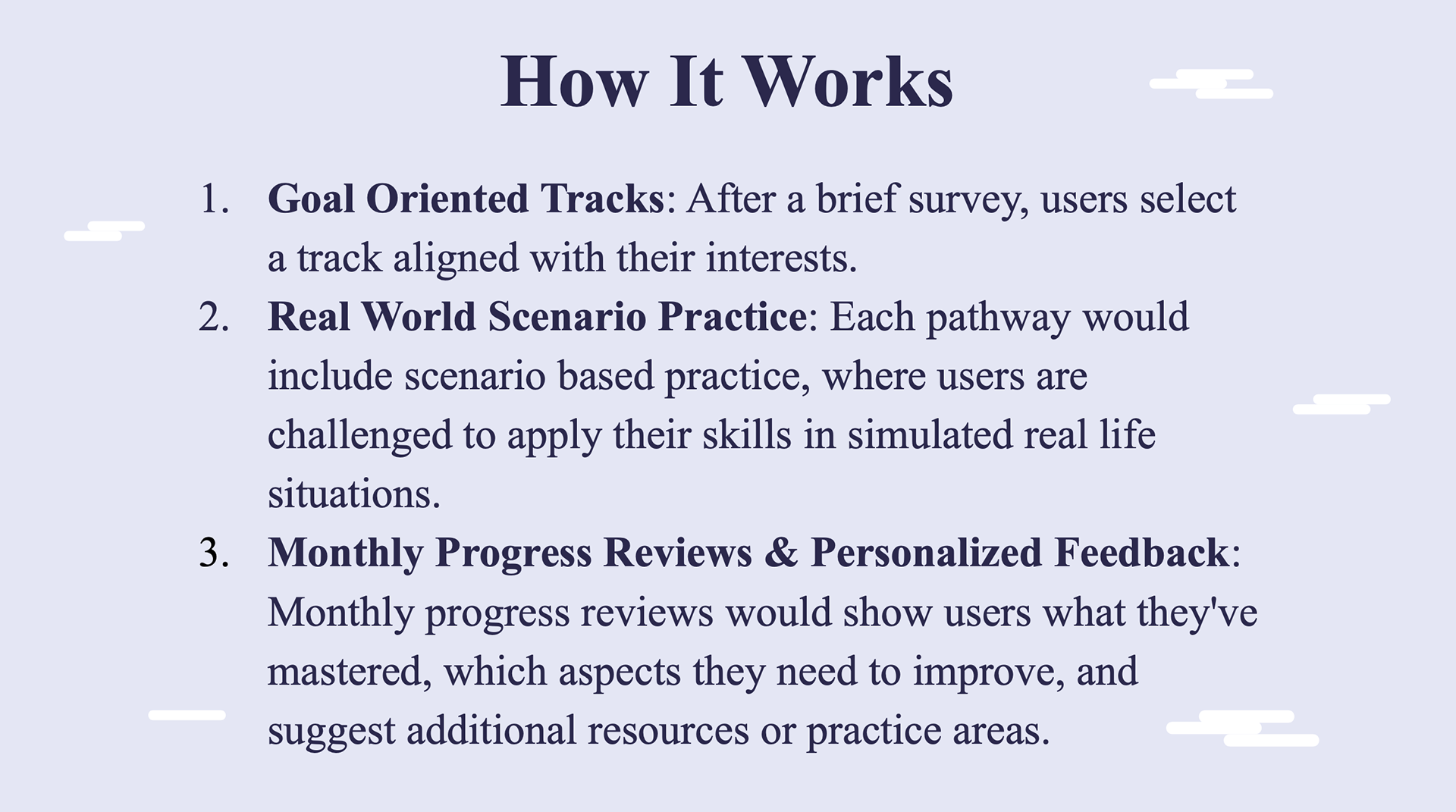
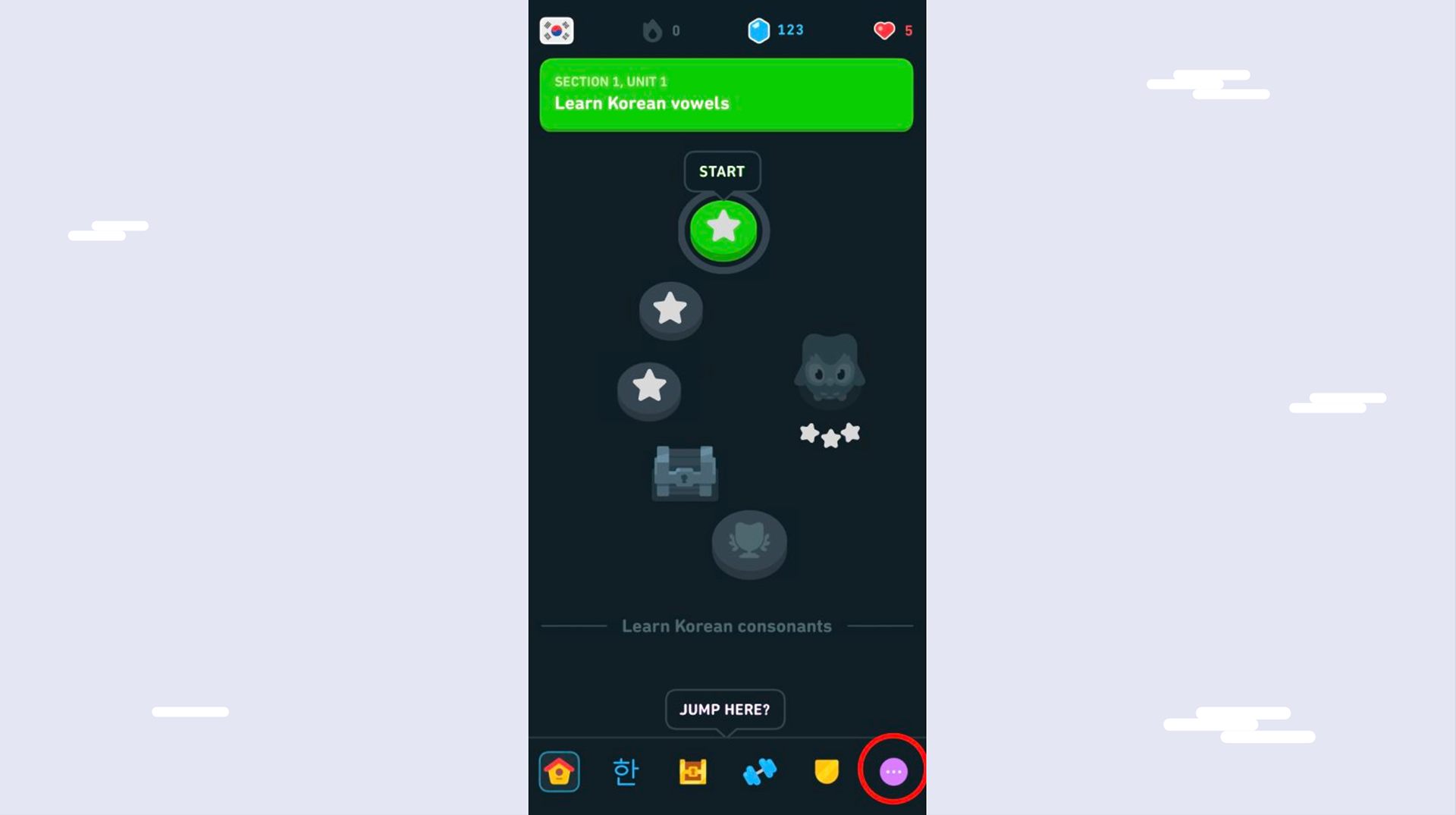
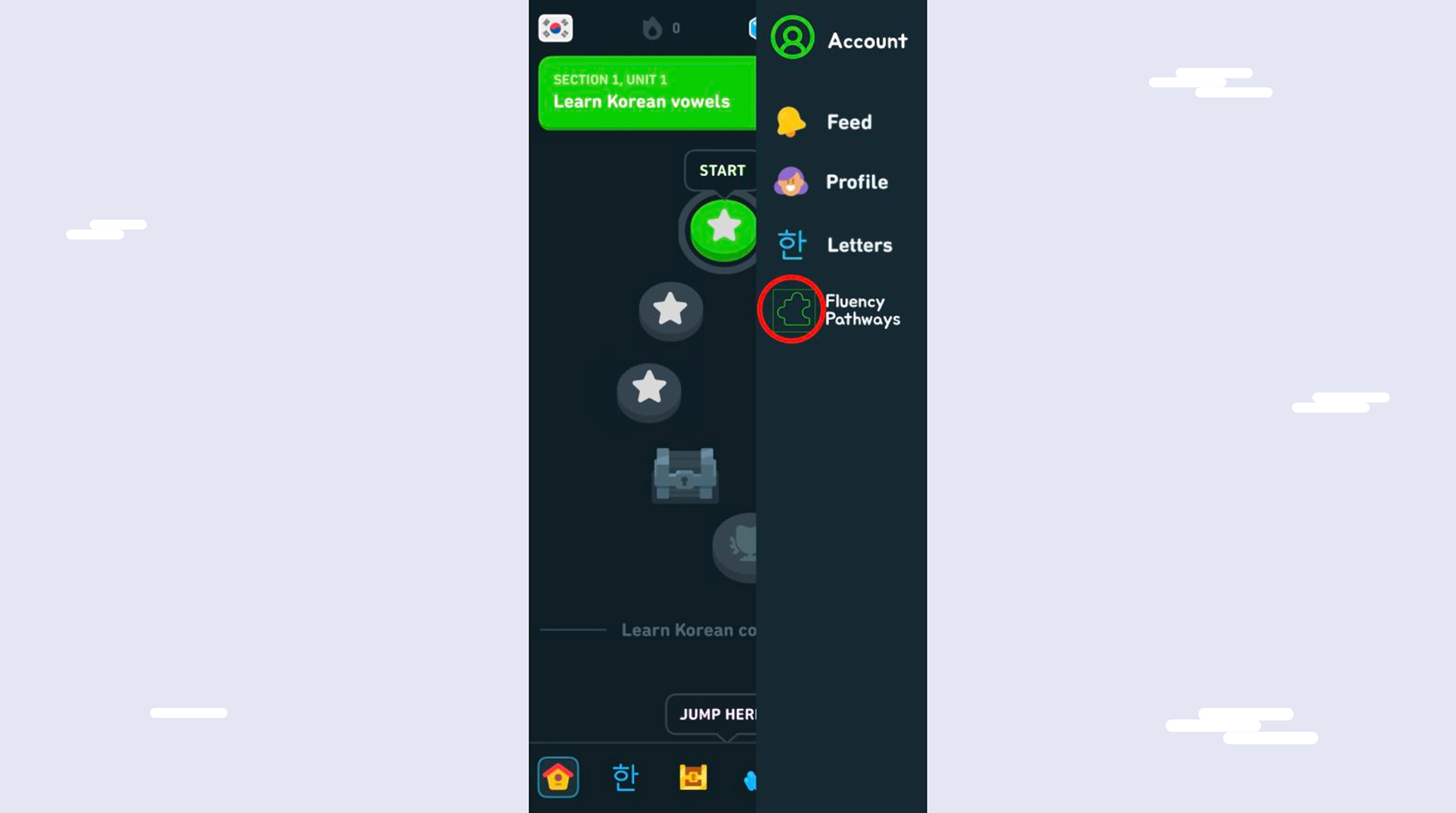
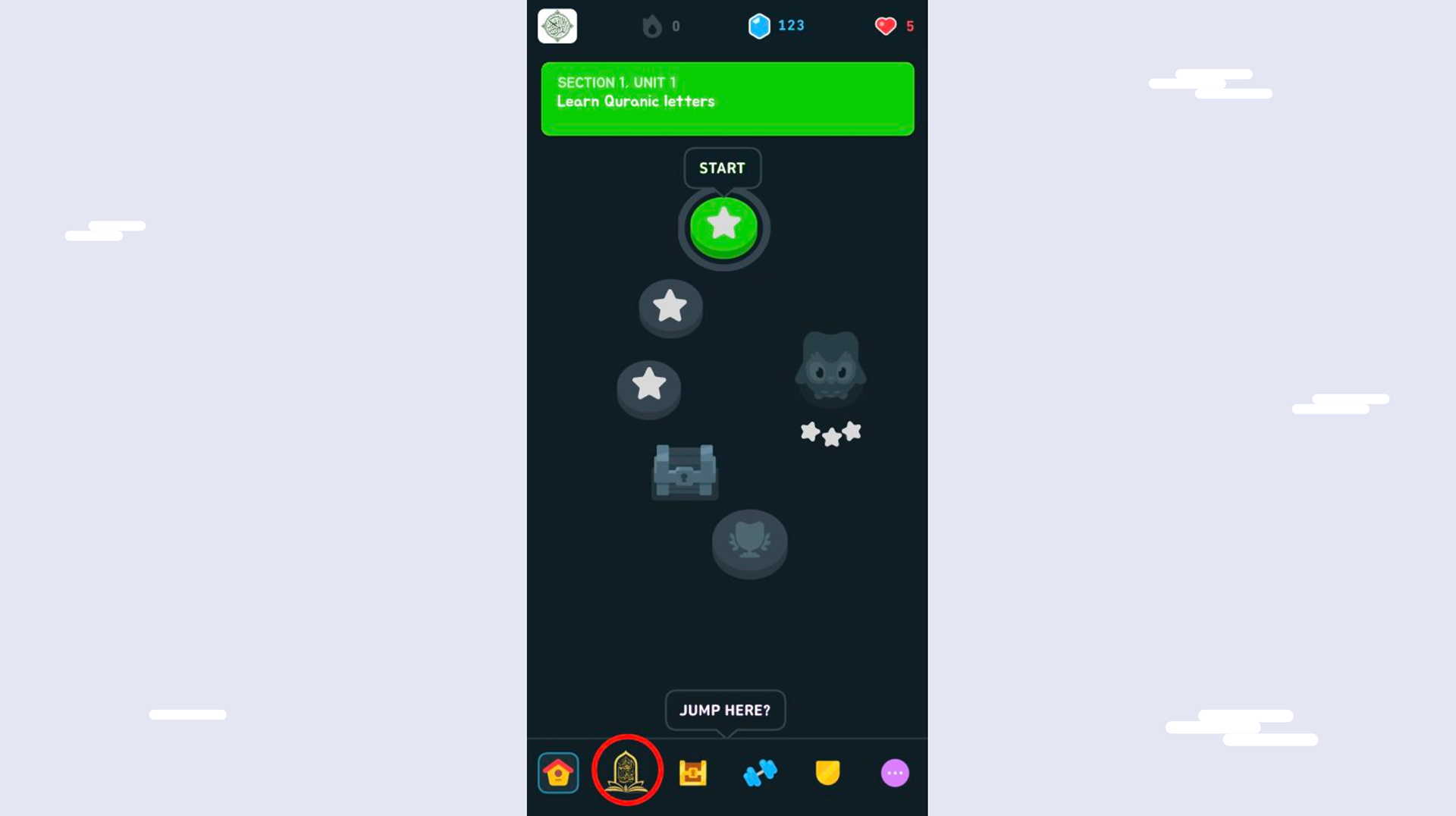
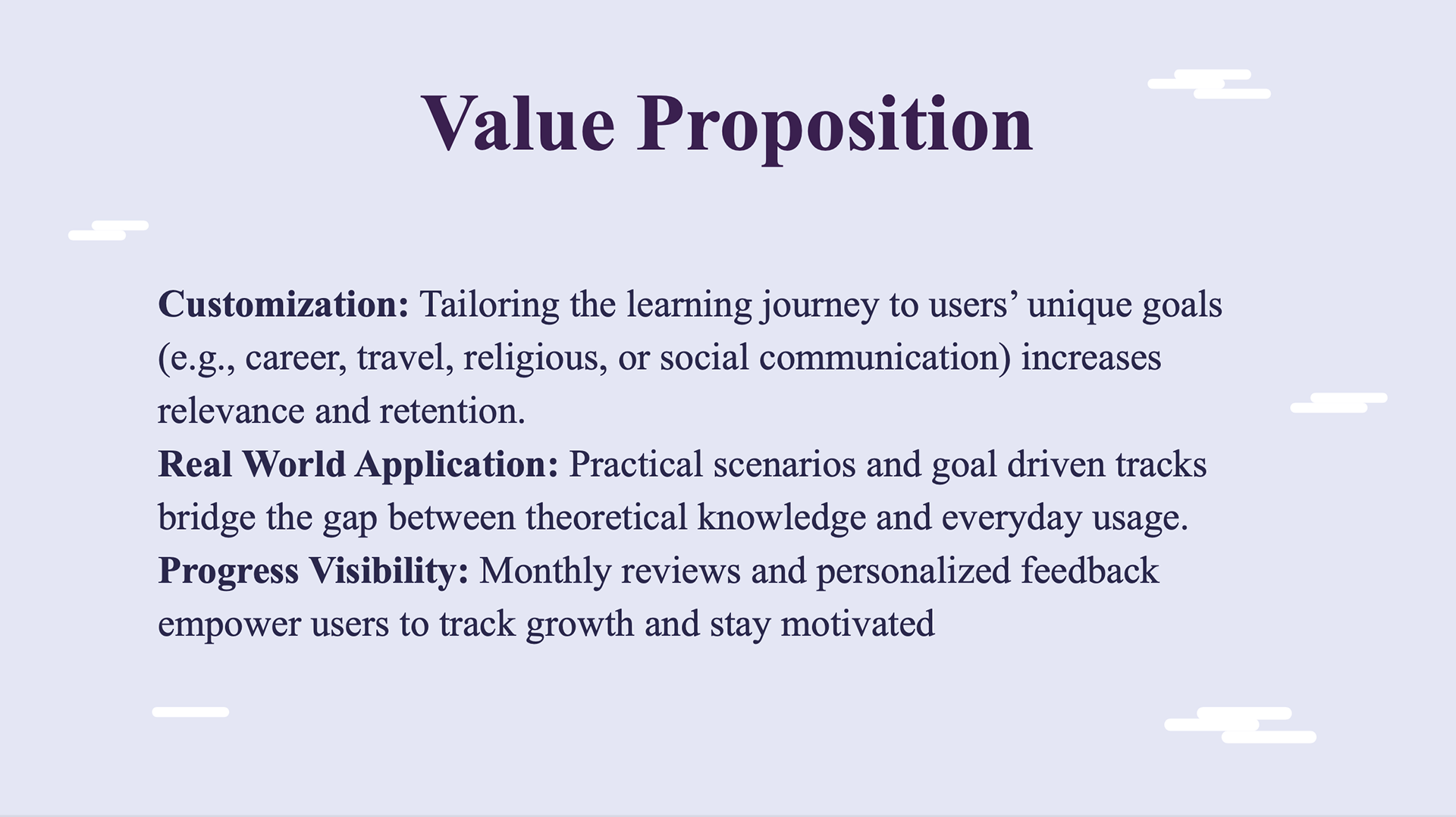
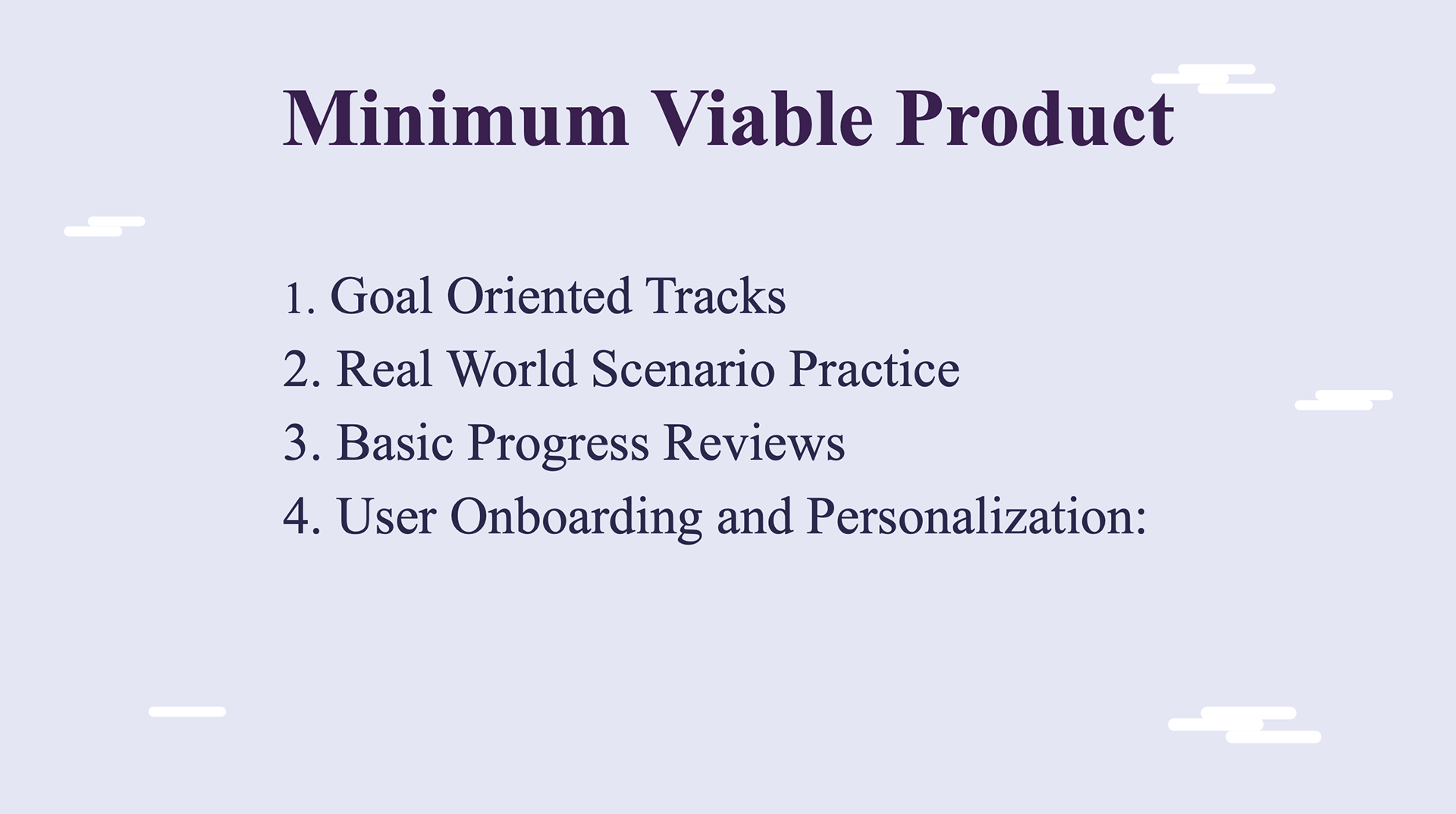
Fluency Pathways introduces goal-oriented tracks that empower users to select a learning path based on their personal needs, whether it’s mastering conversational skills, preparing for travel, or even learning a niche language like Quranic Arabic. This approach enhances motivation, relevance, and engagement by integrating real-world scenarios, progress reviews, and tailored feedback, ensuring users feel both challenged and supported along their journey.
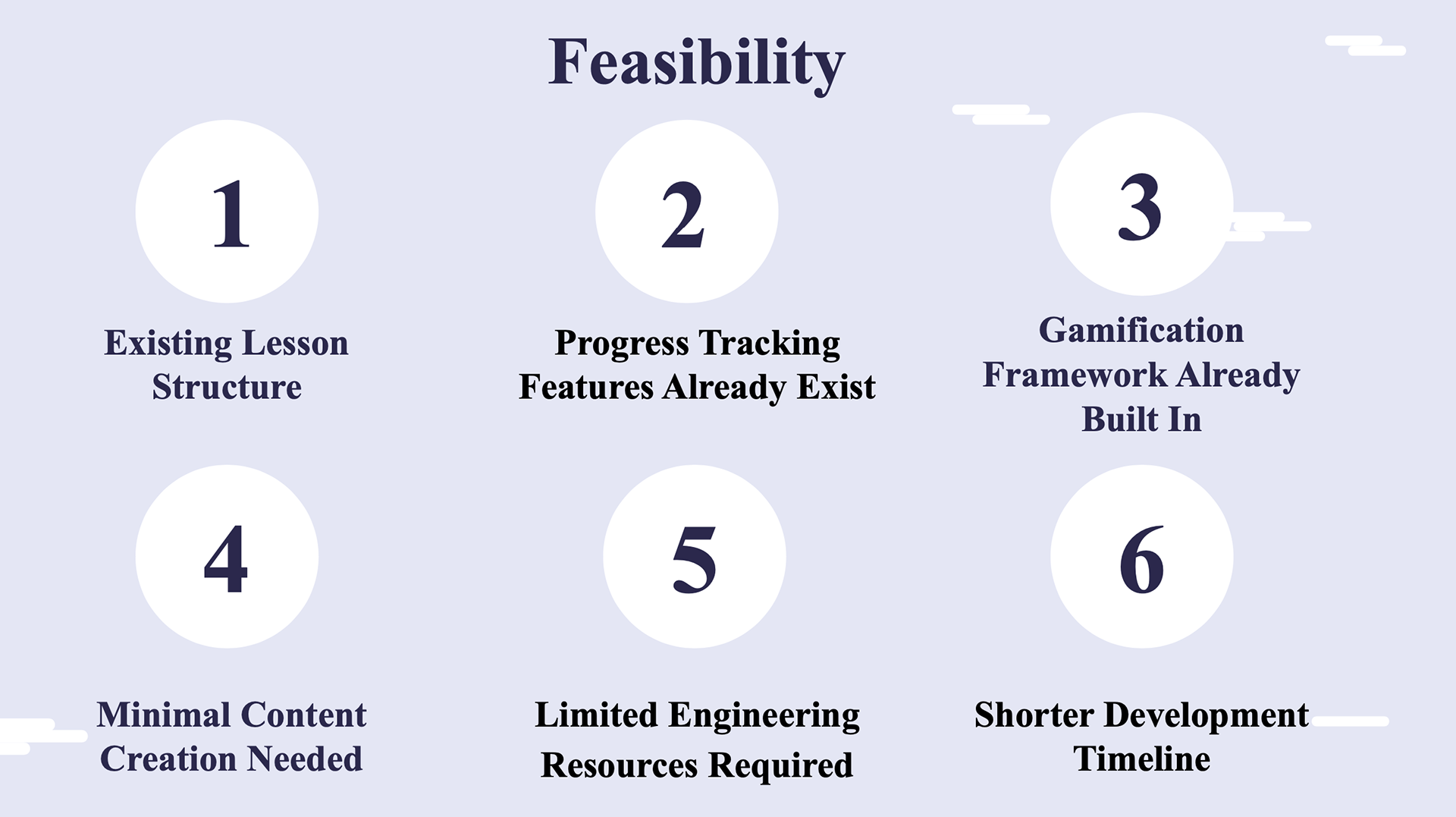
By utilizing Duolingo’s existing structure curated lesson tracks and progress-tracking features—Fluency Pathways can be easily implemented, offering a cost-effective and impactful solution for deeper, more personalized language learning.